
This decision always trips people up. Every. Single. Time. When you start browsing for a Porto wine experience, the difference between a shared van and a private car seems like a simple budget item. But trust me—having spent years navigating the terraces of the Alto Douro—it’s not just about the seat. It’s about who controls the clock.
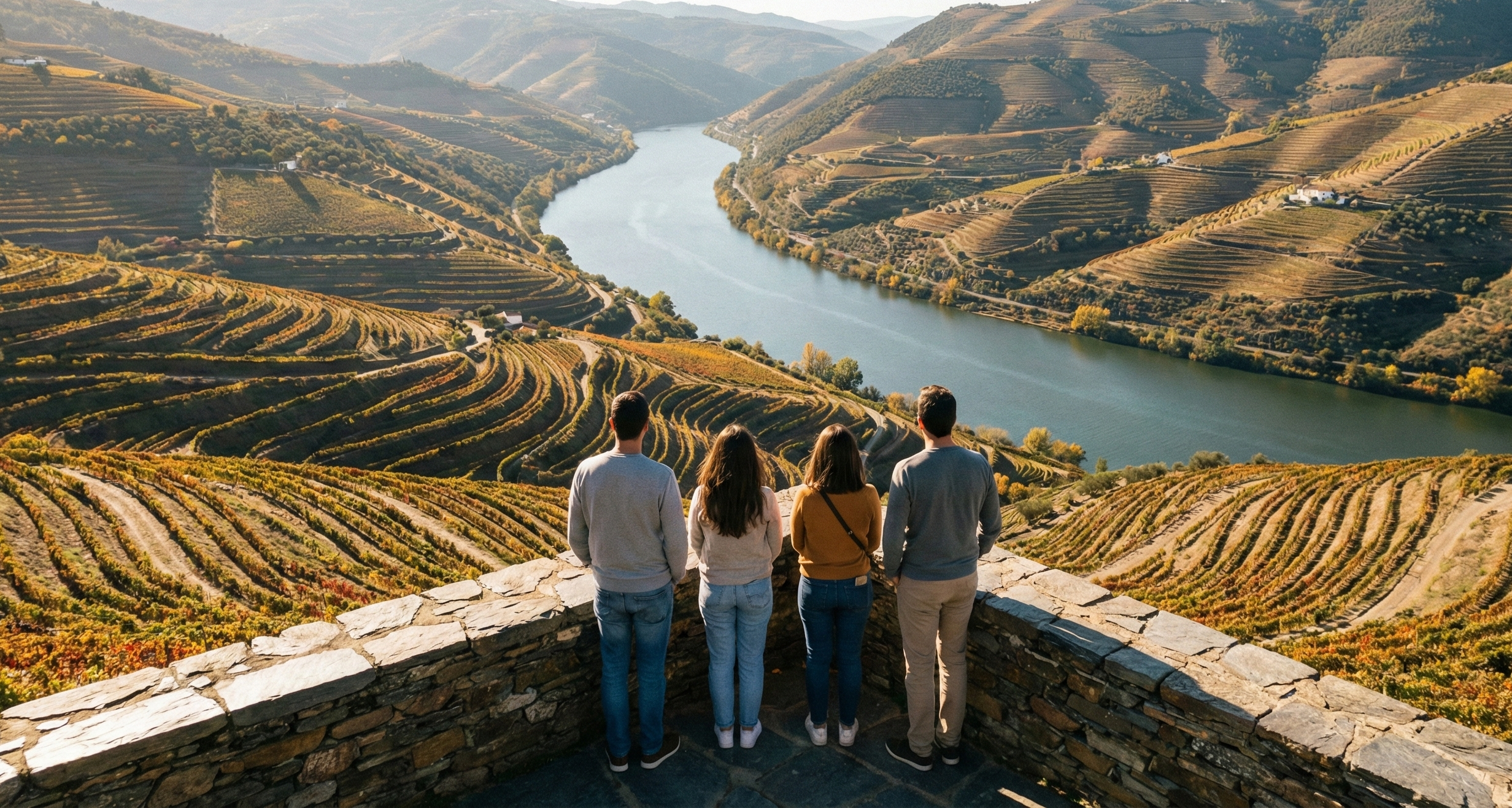
The Douro Valley? It’s not just a place; it’s a sun-drenched labyrinth carved into the hills. A UNESCO World Heritage site, where wild landscapes meet an unpredictable microclimate. Add the 1.5-hour drive from Porto, those heart-stopping hairpin curves of the N222, the scorching summer heat, and the iron-clad schedules of the valley’s top quintas, and suddenly, how you experience it all becomes the make-or-break factor of your trip.
Both options work. Both can crash and burn. And more often than not, the cracks show up halfway through the day—somewhere between the second tasting and the torturous climb to a viewpoint—when it’s way too late to turn back. If you’re still undecided, check out this overview of the best Douro wine tours from Porto for some clarity before you make your choice.
The Anatomy of Small Group Douro Wine Tours: Efficiency vs. Energy
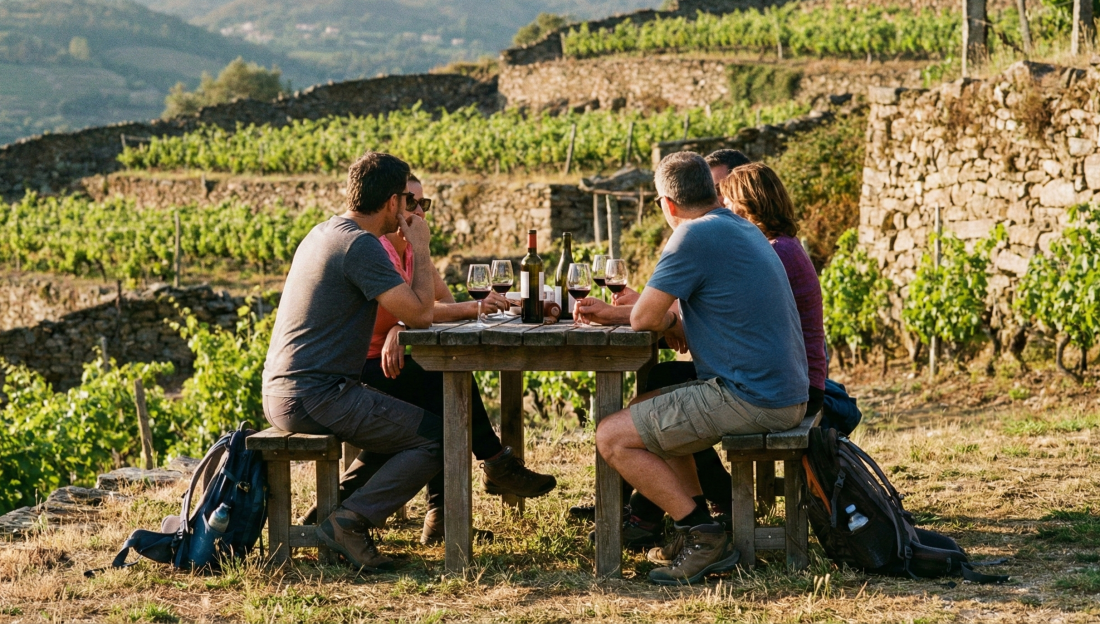
Small group tours are the backbone of Douro tourism. They run on momentum. These carefully calibrated operations are designed to hit the valley’s “Greatest Hits” within an 8- to 10-hour window. Most premium operators use high-top Mercedes-Benz Sprinters or similar vehicles, equipped with serious air conditioning—a must when temperatures in Pinhão can shoot past 40°C (104°F).
The Social Ecosystem: 8 to 12 Strangers
The standard capacity for a “small group” is typically capped at 12 people. It’s no accident—this is the maximum number that allows a guide to maintain personal connections while still benefiting from the economy of scale.
- The Synergy: On a good day, the van transforms into a rolling salon. You meet solo travelers from London, couples from New York, and wine lovers from Sydney. By the time you hit the second quinta, the shared love for Port wine breaks down social barriers. For many, this social buzz is one of the trip’s highlights.
- The Friction: Here’s the thing—group tours run on the “Law of the Slowest Member.” If someone lingers too long in the gift shop or misses the meeting time at a viewpoint, it starts a chain reaction of delays. In the Douro, wineries (quintas) run on tight schedules. Show up 20 minutes late, and you might skip the cellar tour and head straight to the tasting instead.
Logistics: What You Give Up to Gain Peace of Mind
In a group tour, the schedule is locked in months ahead. The operator has already chosen the route, pre-booked lunch at a classic tasca or winery restaurant, and locked in time slots at quintas that can handle groups.
- The Benefit: Zero cognitive load. You don’t have to wrestle with the terrifyingly beautiful switchbacks or stress over parking in tiny villages like Casal de Loivos.
- The Trade-off: You’re on a conveyor belt of excellence. It’s high quality, sure, but it’s standardized. That tiny, unmarked vineyard you spotted from the window? Forget about it. The schedule won’t allow it.
For first-time visitors, this kind of structure is often a godsend. It offers a safe, curated way into the complex wine region without the fear of “doing it wrong.” You follow the guide, you drink the wine, you soak in the views. That “brain-off” convenience? Priceless.
The Private Tour Experience: Transitioning from Passenger to Architect
If small group tours are all about efficiency, private tours are all about agency. Strip away the rhythm of strangers, and the whole feel of the Douro Valley changes. It stops being a “day trip” and transforms into a personal journey through one of the world’s most complex terroirs.
The Power of “The Pivot”: Why Flexibility is the Ultimate Luxury
The most significant perk of a private tour? It’s not the leather seats of a premium SUV. It’s the freedom to change your mind. In a group tour, the schedule is a contract. In a private tour, the schedule is a suggestion.
- The Spontaneous Extension: Imagine you’re at a boutique quinta in the Cima Corgo sub-region. The sun hits the terraced vineyards just right, creating the perfect shot, and the host offers you a taste of a rare, unreleased Colheita Port. In a group tour, the guide’s watch is your worst enemy. In a private tour, you just stay an extra hour and savor it all.
- The Adaptive Route: The Douro’s microclimates are all over the place. If Pinhão is too stifling, a private guide can quickly switch things up, taking you to higher vineyards in the Douro Superior where a cool breeze offers relief, and the Douro Branco wines shine.
The “Quiet” Value: Mental and Physical Space
Private tours cut the noise—literally. The Douro is a region that demands silence. There’s a certain magic in standing at the Miradouro de São Leonardo de Galafura without the hum of a dozen other tourists around you.
For many, the value of a private tour lies in emotional bandwidth. You’re not dealing with social expectations from strangers; you’re fully present with your partner, family, or just the wine itself. That makes the experience feel that much more “high-end,” even if you’re visiting the same spots as the group tours.
Access to “Non-Touristic” Gems
Many of the Douro’s most prestigious, family-run estates won’t accept groups larger than 4 or 6 people. Their tasting rooms are small, historic, intimate.
- Exclusive Doors: By choosing a private format, you unlock access to these smaller estates, places that prioritize education over mass tourism.
- Expert Interfacing: Private guides are often career sommeliers or locals with deep family ties to the region. They don’t just stick to a script; they dive into a high-level dialogue about schist soils, Touriga Nacional grapes, and the shifting tides of the Port industry.
Same valley. Same winding roads. But the private experience adds an intimate layer that group tours simply can’t. You’re not just visiting the Douro; you’re feeling its pulse—at your own pace.
Money Talk: Decoding the Real Cost of the Douro
Yes, private tours cost more. A lot more, sometimes. But before you jump to conclusions about “value for money,” take a step back. Look past that booking fee and ask: what are you really paying for? A common mistake is thinking that a $400 tour automatically means “better” wine than a $150 one. In the Douro? That’s not always the case.
The Shared Tour Economy ($120 – $190 per person)
Small group tours thrive on economies of scale. The cost of the driver, fuel for that 200km round trip from Porto, and vehicle upkeep gets divided across 8 to 12 passengers.
- What you get: Standardized quality. You’ll visit medium-to-large quintas with well-oiled tourism teams. These places are impressive, sure, but you’ll mostly taste the “Entry Level” Rubies, Tawnies, and maybe an LBV (Late Bottled Vintage).
- The Hidden Trade-off: With tight margins, you’re often stuck with a “group lunch”—fixed and communal. It’s tasty and authentic, but don’t expect the refined experience you’d get at places like DOC or Bomfim 1896.
The Private Tour Premium ($350 – $700+ per person)
A private tour? You’re essentially buying a custom logistics insurance policy.
- The “Expert” Premium: You’re not just paying for a driver; you’re paying for an expert guide—often a WSET-certified pro—who can dig into the nuances of aging processes in Vila Nova de Gaia vs. Douro aging.
- Tailored Tastings: Private tours usually feature “Premium” or “Super Premium” flights. Instead of the usual Ports, you might sip on 30-year-old Tawnies, single-quinta Vintages, or limited-edition DOC Douro table wines priced at €80+ per bottle.
- Flexibility with Expenses: On a private tour, lunch is usually a la carte. You choose what to eat—whether it’s a rustic vineyard picnic or a multi-course fine dining experience overlooking the river.
If you’re curious about seasonal price fluctuations and the best times to book, take a look at this deep dive on how much Douro wine tours cost and see how your travel dates impact pricing.
The “Pacing” Factor: Why the Douro Valley Eats Time
This is the most misunderstood aspect of Douro travel. On paper, the distance between Peso da Régua and Pinhão seems like a quick 20-minute dash. In reality? The winding roads (with the famous 27 curves of the N222) and slow-moving agricultural traffic mean everything takes at least twice as long as Google Maps says.
The Collective Gravity of Groups
In a small group, you move as one. This creates what I call “Collective Gravity.”
If two people take forever to finish their dessert, the entire group gets delayed. If you’re late for the boat cruise, the boat waits… or leaves without you. It creates a low-level, ever-present time-anxiety. You’re always watching the guide’s face, waiting for that “time to go” look.
The Elasticity of Private Time
On a private tour, time is elastic. If you’re deep in conversation with a tasting room manager about the 2023 harvest, you don’t have to cut it short.
Pacing isn’t about cramming more in; it’s about doing less, but better. Private travelers rarely complain about missing a third winery. They cherish the freedom to savor the first two without checking their phones. And honestly? The most luxurious part of the day might just be sitting at the river’s edge for an extra 20 minutes, with no rush in sight.
Decision Matrix: Which Format Fits Your Travel Style?
There’s no “perfect” tour—just the one that aligns with your priorities for the day. After years of watching how different travelers react to the Douro’s pace, I’ve spotted clear patterns in who thrives in each format.
Who Small Group Douro Wine Tours Tend to Suit Best:
- The Social Explorer: If you believe wine’s best when shared, and meeting new people is half the fun, the “van energy” is a major win.
- The First-Time Visitor: If you’re still learning the difference between Ruby and Tawny, you don’t need a custom itinerary. You need a high-quality, pre-arranged “Greatest Hits” tour.
- The Budget-Conscious Quality Seeker: You want a professional experience but don’t want to drop $400+. You’d rather save that money for a fancy dinner back in Porto.
- The Efficiency Advocate: You like having a “mission commander” who takes care of all the details—ensuring you hit all the spots: the river, the vineyards, the cellars—all in one seamless day.
Who Private Tours Work for (Without Exception):
- Couples and Milestones: Honeymoons, anniversaries, or proposals call for intimacy. Ten strangers in a van? Not the vibe.
- The “Wine-Centric” Traveler: If you’re a collector or true enthusiast, wanting to visit producers like Quinta do Crasto or Quinta do Vallado, private tours are the only way to guarantee access to these exclusive spots.
- Families with Multigenerational Needs: Kids need breaks. Elderly parents need slower paces. The flexibility to adjust on the fly? Priceless.
- Photography Enthusiasts: Capturing the perfect “golden hour” in the Douro? You need to be at the right spot at the right time. A private driver will wait for the light. A group bus? Not so much.
Assumptions That Don’t Hold Up (The Reality Check)
Before you hit “book,” let’s debunk three myths that often lead to disappointment:
- Myth: “Private Always Means Luxury.”
Reality: A private tour just means a “non-shared” experience. You could get a basic sedan with a driver who knows less about wine than your average tour guide. Always check the vehicle type and guide credentials—look for mentions of sommelier or WSET certifications. - Myth: “Small Groups Get Inferior Wine.”
Reality: Many top-tier quintas in the Cima Corgo region have beautiful tasting rooms designed for groups. You’ll drink world-class wine—what changes is the depth of the flight, not the producer’s quality. - Myth: “Private Tours Unlock ‘Secret’ Wineries.”
Reality: Access in the Douro is all about relationships. A skilled group guide with 10 years of experience will often get you better access than a “premium” private driver who’s just getting started. The operator matters more than the format.
So… Which One Should You Choose?
The real mistake isn’t about choosing a group tour over a private one—it’s choosing without knowing exactly what you want from your 10 hours in the valley.
If you’re after a lively, educational, high-energy day where the logistics are handled with military precision, book the small group tour. It’s the safest, most cost-effective way to dive into the region.
But if you want to truly feel the “soul” of the Douro, at your own pace, with the freedom to linger over a glass of 1970 Port while watching the river drift by, invest in a private tour. It’s not some magical experience—it’s just the luxury of fewer compromises.
Still on the fence about trip length? If you’re torn between a full-day or half-day tour, check out this comparison of full-day versus half-day Douro wine tours for some clarity.